GEOTECHNICAL ENGINEERING
EUGENE OREGON

Geotechnical Engineering in Eugene Oregon

Geotechnical engineering with regional judgment.

LEARN MORE

In Eugene, many projects hit a wall when the geotech report lists numbers the structural engineer can’t use directly. That’s where a dedicated soil mechanics study comes in. We take the raw SPT blow counts, the lab triaxial curves, and the grain-size distributions and turn them into design parameters—bearing capacity, settlement, lateral earth pressure. The Willamette Valley has a mix of alluvial silts, gravel stringers, and weathered clay that behaves differently at every site. A CPT test across the floodplain near the Willamette River gives us continuous stratigraphy without the disturbance of traditional sampling, which helps refine the stiffness profile for settlement analysis. Our team works with local architects and builders to make sure the foundation recommendations match how the structure actually loads the ground, not just what a textbook says.

We don’t hand you a boring log and walk away. We give you the friction angle, the cohesion, the modulus, and the settlement curve—everything the structural engineer needs.
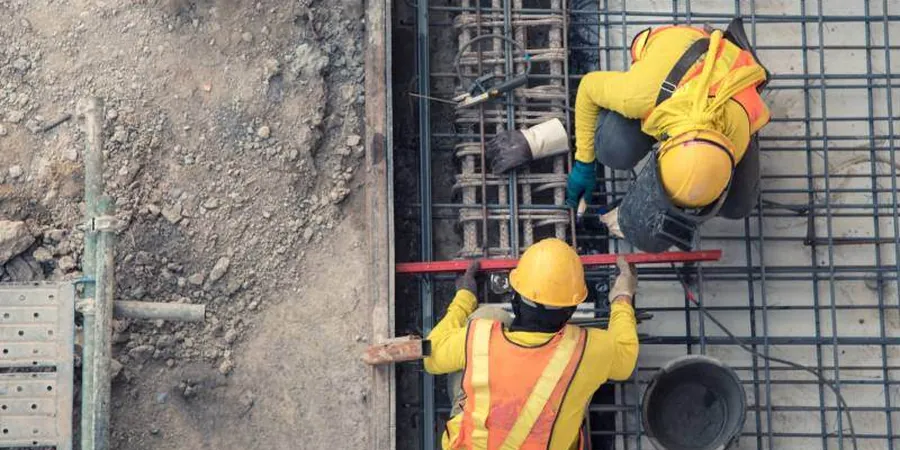
Geotechnical Engineering in Eugene Oregon
Technical reference — Eugene Oregon

Our service areas

Local geology

The 2022 Oregon Structural Specialty Code adopts IBC 2021 with state-specific amendments, and Chapter 18 of the IBC ties the allowable foundation pressure directly to the soil parameters we derive in a soil mechanics study. What matters in Eugene is the seasonal groundwater swing—from near-surface in winter to several feet down in August—and how that affects effective stress and shrink-swell potential in the clay-rich units north of Beltline. We run consolidated-undrained triaxial tests on Shelby tube samples to capture the undrained shear strength of these low-permeability soils. For sites with shallow gravel, a grain-size analysis confirms the drainage characteristics and helps us select the right friction angle for bearing capacity calculations. Our lab operates under ASTM D4767 and D4318, with every test tied to a specific design question, not just a checklist.

Applicable standards

IBC 2021 (adopted by Oregon with amendments, Chapter 18), ASCE 7-22 (Minimum Design Loads, seismic site classification), ASTM D4767 (Consolidated Undrained Triaxial Compression Test), ASTM D4318 (Atterberg Limits), ASTM D2487 (Unified Soil Classification System)

Need a geotechnical assessment?

Reply within 24h.

Email: contact@geotechnical-engineering.vip

Why choose us

The difference between a site in the flatlands near Delta Highway and one up in the south hills isn’t just the view—it’s the soil behavior under seismic load. Downtown Eugene sits on up to 80 feet of soft alluvium that amplifies ground motion, while the hillside sites can bring their own problems with colluvium creep and shallow bedrock. A soil mechanics study that skips the dynamic properties leaves the structural engineer guessing on the site class and the liquefaction susceptibility. We’ve seen projects where ignoring the cyclic softening potential in the silts led to costly over-excavation later. The 1993 Scotts Mills earthquake reminded everyone in the Willamette Valley that we’re in a seismically active region. Our studies include the modulus reduction curves and damping ratios the geotechnical engineer needs for a defensible site-specific response analysis.

Technical parameters

ParameterTypical value
Effective friction angle (φ')28° to 36° (alluvial gravels)
Undrained shear strength (Su)800 to 2,200 psf (Willamette silts)
Compression index (Cc)0.18 to 0.35 (normally consolidated clays)
Modulus of elasticity (Es)150 to 450 tsf (SPT N-based, granular)
At-rest earth pressure coefficient (Ko)0.45 to 0.60 (NC soils)
Swell potentialLow to moderate (weathered clay units)
Seismic site class (per ASCE 7-22)D (typical), C (gravel areas)

Frequently asked questions

What does a soil mechanics study cost for a typical Eugene commercial lot?
How is a soil mechanics study different from a standard geotechnical report?

A standard geotech report identifies soil types and gives basic recommendations. A soil mechanics study goes further—it quantifies the stress-strain behavior of each layer. You get the friction angle, the undrained shear strength, the compression index, the elastic modulus. It’s the difference between knowing what’s in the ground and knowing how the ground will actually perform under load.

Do you need a soil mechanics study for a single-family home in Eugene?

Most single-family homes in Eugene don’t require a full soil mechanics study. But if you’re building on a slope steeper than 15%, or on a lot with known fill or organic soils, the City may ask for settlement and bearing capacity analysis beyond a standard soils report. We can scope the study to fit the specific risk.

Location and service area

We serve projects across Eugene Oregon and its metropolitan area.

View larger map