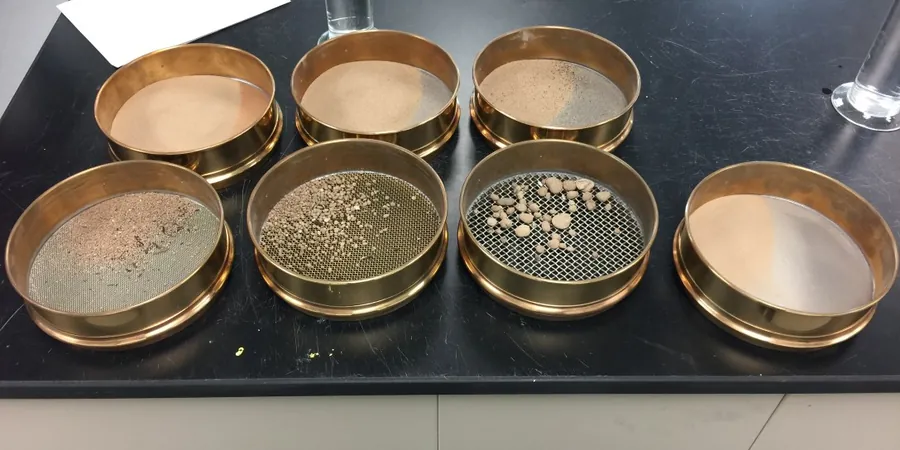
A recent mixed-use project near the Whiteaker neighborhood hit a complication familiar to anyone who works with Willamette Valley soils: the upper 4 feet looked like decent sandy silt, but the gradation curve told a different story below that depth. The fines content jumped past 40 percent, which completely changed the drainage assumptions for the foundation. That is exactly the type of situation where a combined sieve and hydrometer analysis becomes non-negotiable. We see this pattern across Eugene, where the transition from Missoula Flood deposits to the older Spencer Formation creates sharp changes in gradation over short vertical distances. A full grain size distribution curve, from the coarse fraction down through the silt and clay range, gives the design team the particle-size data needed to classify the material correctly under ASTM D2487 and to predict how water and load will interact with the subgrade. In our experience, skipping the hydrometer portion on silty sites along the Willamette is a gamble that shows up later as unexpected settlement or poor compaction response. When the project also involves deep foundation elements, we often pair this analysis with CPT testing to correlate the continuous tip resistance profile with the laboratory gradation results, especially where the stratigraphy is too variable for discrete sampling alone.
A complete grain size curve is the single most cost-effective index test for predicting how Willamette Valley soils will behave under load and moisture change.