GEOTECHNICAL ENGINEERING
EUGENE OREGON
HomeSeismic

Seismic in Eugene Oregon

Geotechnical engineering with regional judgment.

LEARN MORE
Seismic in Eugene Oregon

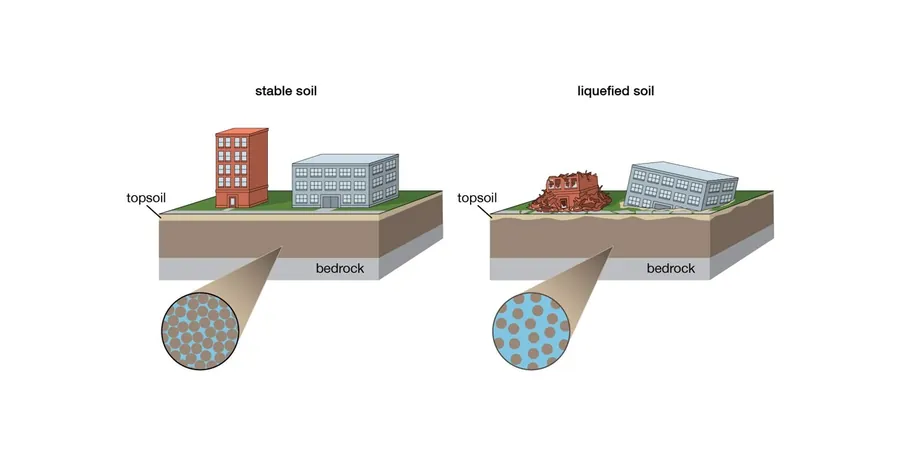
In Eugene, seismic design must account for the Willamette Valley’s basin effects and the Cascadia Subduction Zone’s long-duration shaking potential. Our local practice integrates site-specific soil liquefaction analysis to map saturated alluvial deposits along the Willamette River, and seismic microzonation to resolve amplification patterns across the Eugene-Springfield metro area. All assessments follow ASCE 7-22 Chapter 11 and Oregon Structural Specialty Code provisions, with ground motion inputs tied to USGS National Seismic Hazard Model updates for the Pacific Northwest.

These studies are critical for essential facilities, multi-story mixed-use structures, and public infrastructure where post-earthquake functionality is mandated. For performance-based designs targeting immediate occupancy, we pair microzonation results with base isolation seismic design to decouple superstructures from near-fault pulses and basin-generated surface waves. Every deliverable aligns with Eugene’s geologic hazard overlay zones and current IBC risk-targeted performance criteria.

Available services

Soil liquefaction analysis

→ View details

Base isolation seismic design

→ View details

Seismic microzonation

→ View details

Eugene's location in the southern Willamette Valley means anchor systems contend with a unique subsurface profile—thick sequences of Willamette Silt overlying older alluvial gravels, with groundwater often within 10 feet of the surface during the rainy season. This saturated, low-permeability soil demands a careful balance between active prestressing and passive load development. A standard tieback that performs flawlessly in the basalt bedrock of the Columbia Gorge can creep or lose bond in the valley's clay-rich deposits. Our design approach for slope-stability projects integrates site-specific shear strength parameters from consolidated-undrained triaxial testing, because assuming drained behavior in these silts can overestimate passive resistance by 30% or more.

In Willamette Silt, active anchor lock-off loads must account for a potential relaxation loss of 3–5% over the first 30 days due to soil creep.
Our service areas

Methodology and scope

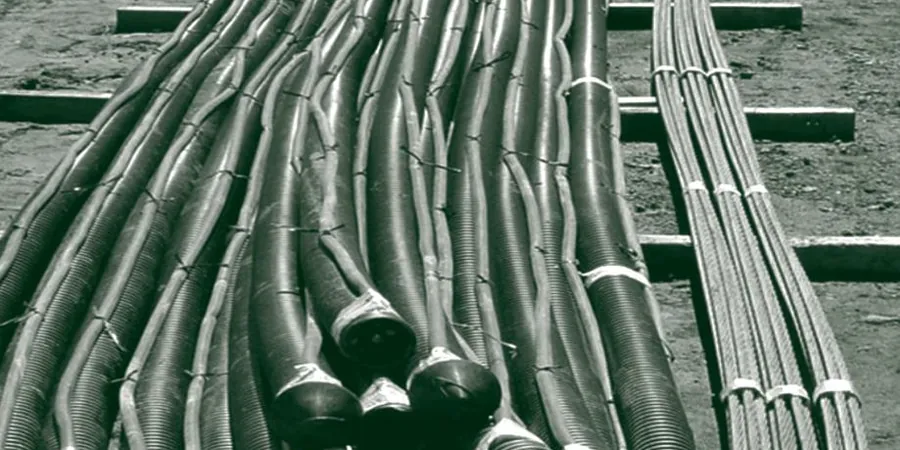
The physical execution of an anchor system in Eugene usually begins with a track-mounted Klemm or Hutte drill rig that can handle the transition from soft silt into dense cobble layers without losing alignment. We specify open-hole drilling with segmental casing through the overburden, then switch to a down-the-hole hammer once the gravels or weathered bedrock are encountered. Tendon assembly follows PTI recommendations, with strand encased in corrugated HDPE sheathing for the unbonded length, and a grout mix designed to achieve a minimum 28-day strength of 4,000 psi. The difference between active and passive anchors often comes down to the stressing sequence—active bars are tensioned to 80% of their ultimate load before lock-off, while passive elements rely entirely on ground movement to mobilize resistance. This distinction becomes critical in retaining-walls design, where a soldier pile wall may use a combination of both to limit lateral deflection during excavation.
Active and Passive Anchor Systems for Willamette Valley Soils
Technical reference — Eugene Oregon

Local considerations

The most common mistake we see in local excavations is specifying a single row of passive anchors through the Willamette Silt without accounting for the preloading needed to limit movement in adjacent structures. A contractor may install 30-foot Dywidag bars with a 15-foot bond zone, but if the silt creeps under sustained load, the wall can deflect 2 to 3 inches before the passive anchor fully engages—enough to crack a neighboring foundation or buckle a sidewalk. In one case near the Whiteaker neighborhood, a shoring design that omitted active prestress resulted in measurable settlement of an adjacent wood-frame building, triggering a costly remediation. The fix was a combination of active strand anchors in the upper row and a deep-excavations monitoring program with inclinometers to track real-time displacement during subsequent construction phases.

Need a geotechnical assessment?

Reply within 24h.

Email: contact@geotechnical-engineering.vip

Applicable standards

ASCE 7-22 (Minimum Design Loads and Associated Criteria for Buildings and Other Structures), IBC 2024 Chapter 18 (Soils and Foundations) and Chapter 33 (Safeguards During Construction), PTI DC35.1-22 (Recommendations for Prestressed Rock and Soil Anchors), ASTM D1586-18 (Standard Test Method for Standard Penetration Test), FHWA GEC No. 4 – Ground Anchors and Anchored Systems (Sabatini et al., updated 2023)

Technical parameters

ParameterTypical value
Design methodLimit equilibrium (FHWA GEC No. 4) for external stability; beam-on-elastic-foundation (PYWall) for internal bending
Active anchor prestress0.70–0.80 fpu (PTI DC35.1), verified by lift-off test after lock-off
Passive anchor mobilizationDisplacement-dependent; typically 0.5–1.5 inches at the wall face to reach design load in Eugene silts
Unbonded length (active)Minimum 15 ft or extends beyond the critical failure surface by 5 ft, whichever is greater
Grout compressive strength4,000 psi at 28 days (ASTM C109), with Type II cement for moderate sulfate resistance
Corrosion protectionClass I (PTI) for permanent anchors: epoxy-coated bar + corrugated sheathing + grout cover
Proof testing frequency100% of production anchors per IBC 1810.3.3.3, with creep test on 5% of anchors (minimum 3)
Free length estimation (passive)Bond length calculated using ultimate skin friction of 20–40 psf in silt, based on SPT N-values

Frequently asked questions

What is the difference between active and passive ground anchors?

Active anchors are prestressed immediately after grouting to apply a known force to the retaining structure, which controls wall movement from the start. Passive anchors are not prestressed; they develop resistance only as the ground deforms and loads the tendon. In Eugene's compressible Willamette Silt, active anchors are strongly preferred when adjacent buildings or utilities cannot tolerate more than an inch of lateral movement.

How much does an anchor design package cost for a project in Eugene?
Which ASTM standard governs anchor testing in Oregon?

Performance and proof testing procedures follow ASTM A944 for bar tendons and ASTM E488 for load testing of anchors in soil or rock. For strand systems, PTI DC35.1 provides the acceptance criteria, including creep test duration (typically 10 minutes at the lock-off load plus 60 minutes at 1.33 times the design load) and allowable movement limits. All testing must be supervised by a special inspector per IBC Chapter 17.

Location and service area

We serve projects across Eugene Oregon and its metropolitan area.

View larger map