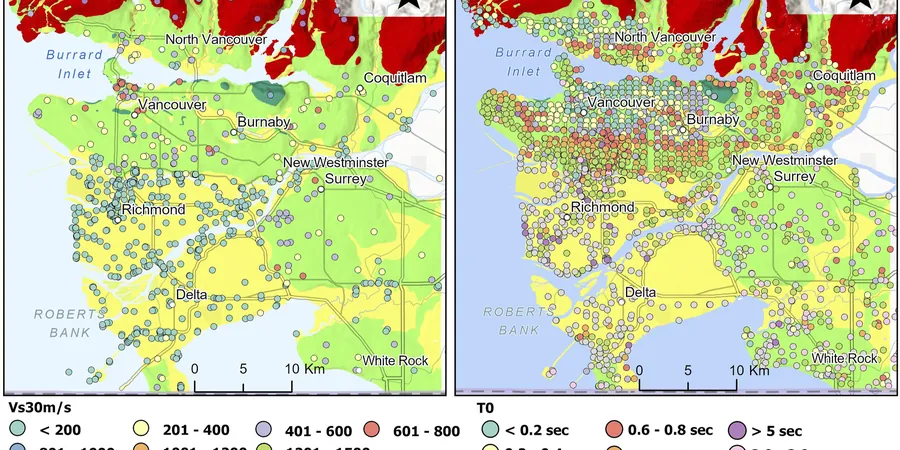
A seismic microzonation study in Eugene starts with a set of triaxial geophones and a 24-channel seismograph. We set up a linear array across the site, hammer a steel plate, and record the surface waves that travel through the valley alluvium and weathered sandstone beneath the grass seed fields. The equipment captures shear-wave velocity profiles down to 30 meters—that VS30 number that determines your Site Class per ASCE 7. Around the Willamette Valley, the contrast between young floodplain silts and the Eugene Formation sandstone can shift a site from Class D to Class C within a hundred feet. Because the city sits on a complex mix of Holocene alluvium and Tertiary marine sediments, we often combine the MASW line with a few SPT borings to tie the geophysical readings to actual soil descriptions and blow counts. The seismograph data feeds into a 1D site response model, which generates the design acceleration spectra you need for structural engineering.
VS30 is not a number you pull from a county map. It changes within a single Eugene block when the alluvium thins over the Eugene Formation.