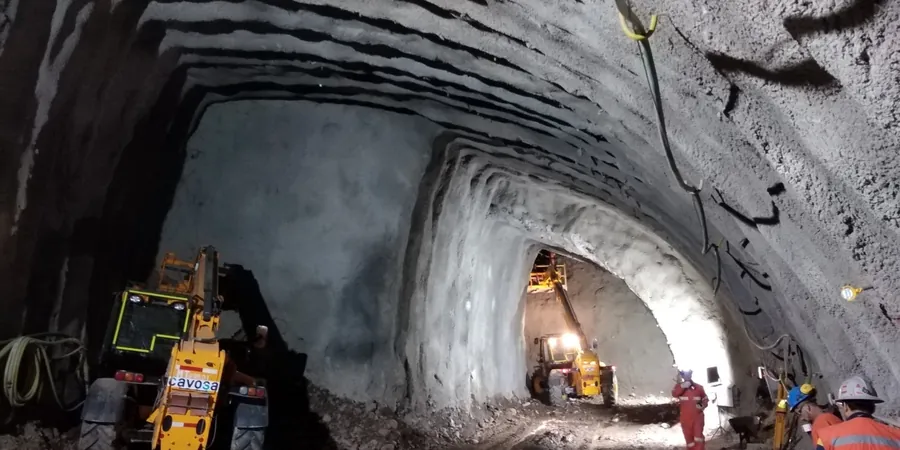
In Eugene, when a tunneling drive hits a pocket of saturated Willamette Silt, the face doesn't just ravel—it flows. I've seen crews lose three feet of advance in a single shift because the stand-up time was misjudged. That's why our geotechnical analysis for soft soil tunnels in Eugene is built around the real stratigraphy you encounter here: interbedded Quaternary alluvium overlying weathered Eugene Formation sandstone, with groundwater perched at eight to twelve feet across much of the valley floor. The USDA soil survey maps these as Clackamas and Chehalis series silts, but what matters underground is the undrained shear strength and the soil's sensitivity to remolding. We run our lab program off ASTM D4767 consolidated-undrained triaxial tests, not just index properties, because tunnel face stability in Eugene soft soil demands more than a pocket penetrometer guess. For drives where the alignment passes under the Willamette River's historic flood channels, we often pair the analysis with a liquefaction assessment to quantify excess pore pressure buildup during a Cascadia event, since cyclic softening in these silts can drop the factor of safety below unity fast.
In Eugene's Willamette Silt, tunnel face stability is governed by the rate of undrained pore pressure equalization—not by total stress alone.