GEOTECHNICAL ENGINEERING
EUGENE OREGON
HomeLaboratoryAtterberg limits

Precision Atterberg Limits Testing for Eugene Construction Projects

Geotechnical engineering with regional judgment.

LEARN MORE

The southern Willamette Valley floor, where Eugene sits at roughly 430 feet elevation, is underlain by thick Quaternary alluvial deposits of the Willamette Silt—a wind-deposited unit that can behave like fat clay when saturated. Any shallow foundation design here has to contend with plasticity indices that swing from 12 to over 35 depending on organic content and silt lensing. Our lab runs liquid limit and plastic limit determinations under ASTM D4318, delivering results that feed directly into Unified Soil Classification System (USCS) assignments. For deeper stratigraphy we often pair Atterberg data with grain-size analysis to bracket the silt-clay transition, and when near-surface bearing is marginal we reference findings from footings design to adjust embedment depth in high-PI layers.

A plasticity index above 20 in Willamette Silt signals moderate expansion potential—ignoring it can rack up six figures in slab repairs within five years.
Our service areas

Scope of work

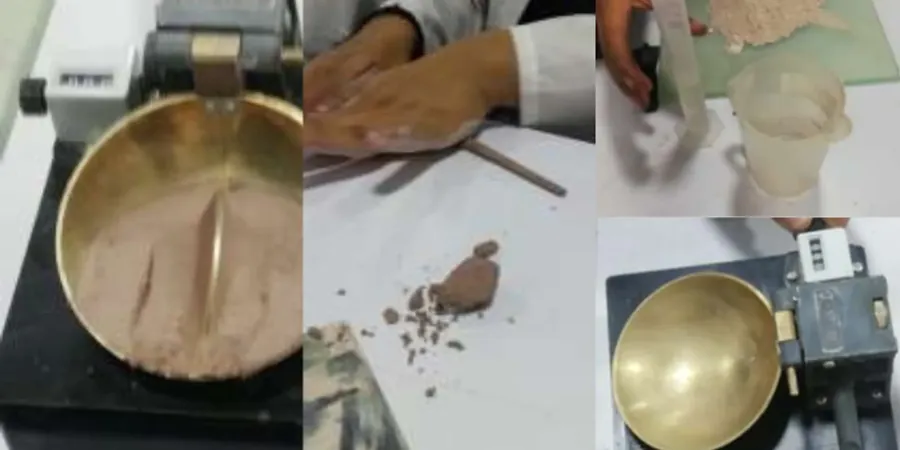
The test apparatus itself is straightforward but unforgiving of poor technique: a brass cup with a hard-rubber base, a grooving tool ground to precise dimensions, and a glass plate for rolling 3-mm threads. In Eugene, where winter groundwater can rise to within 18 inches of grade in the Bethel-Danebo area, moisture-content precision matters enormously—a one-percent swing in water content near the liquid limit can shift the classification from silt to clay. We dry samples at 110°C in forced-air ovens, sieve to minus-425-micron fraction, and report both the liquid limit via Casagrande cup and the plastic limit with thread-rolling verification. When the PI comes back above 25, the conversation typically turns to volume-change potential, and we often recommend following up with triaxial testing to quantify effective-stress strength parameters for settlement-sensitive structures near the Willamette River floodplain.
Precision Atterberg Limits Testing for Eugene Construction Projects
Technical reference — Eugene Oregon

Area-specific notes

Eugene's seismic hazard is real: the city sits roughly 50 miles west of the Cascadia Subduction Zone, and the February 2024 Scotts Mills magnitude-4.2 event was a reminder that shallow crustal earthquakes can strike without warning. High-plasticity clays that pass Atterberg limits testing with PI values exceeding 30 are susceptible to cyclic softening during prolonged ground shaking. In the 1993 Scotts Mills earthquake, silty foundation soils in parts of the mid-Willamette Valley lost stiffness, contributing to differential settlement in light-frame construction. A routine set of Atterberg determinations costs less than a single truckload of over-excavation, and it tells you whether the native material will pump water into your footing trench or hold its shape. For critical facilities the data feeds into liquefaction assessment screening, particularly where the groundwater table sits within 15 feet of the surface—a common condition west of Highway 99.

Need a geotechnical assessment?

Reply within 24h.

Email: contact@geotechnical-engineering.vip

Standards used

ASTM D4318-17, ASTM D2487 (USCS), ASTM D2216 (moisture content), AASHTO T-89 / T-90

Technical parameters

ParameterTypical value
Test standardASTM D4318-17
Liquid limit deviceCasagrande cup (hard-rubber base)
Sample preparationOven-dried at 110 ± 5°C, wet-sieved to <425 µm
Liquid limit rangeTypically 28–52% for Eugene basin silts
Plastic limit rangeTypically 18–31%
Plasticity index (PI) range8–35 depending on organics
Reporting classificationUSCS: CL, CH, ML, MH per ASTM D2487
Turnaround3–5 business days standard

Common questions

What is the cost for Atterberg limits testing in Eugene?

A standard liquid-limit/plastic-limit pair typically runs between US$70 and US$90 per sample when part of a larger index-property package. Turnaround time and the number of points on the flow curve influence the final price, so we provide a firm quote once we know the project scope.

How much soil does the lab need for a reliable Atterberg determination?

About 150 grams of minus-425-micron material is ideal. We can work with as little as 80 grams if the sample was extracted from a Shelby tube, but having the full quantity ensures we can run multiple liquid-limit trials and still retain material for companion grain-size analysis.

Can you run Atterberg limits on organic soils from the Eugene wetlands?

Yes. We oven-dry organic silts at 60°C instead of 110°C to avoid burning off organic matter that would artificially lower the liquid limit. The report notes the drying temperature so the engineer can judge whether the values represent field behavior correctly.

Do you pick up samples from job sites around Eugene?

We offer sample pickup across the Eugene-Springfield metro area, including Glenwood, Bethel, and River Road neighborhoods. Samples can also be dropped off at our receiving window during business hours.

Location and service area

We serve projects across Eugene Oregon and its metropolitan area.

View larger map