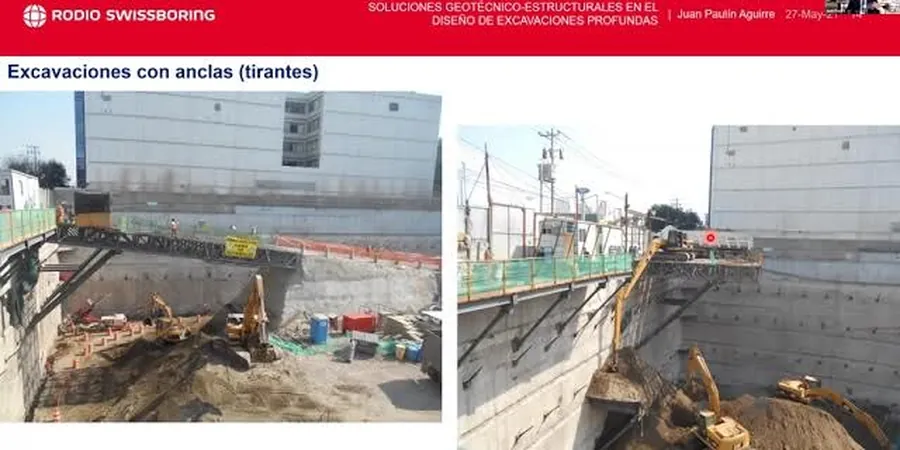
In Eugene, the biggest headache on any deep dig isn't the depth itself; it's what happens when you hit the Willamette Silt at 15 feet and the groundwater starts seeping in faster than the sump pumps can handle. We have seen projects near the Whiteaker neighborhood stall for weeks because the contractor assumed the alluvium would stand unsupported long enough to place the rebar cage. The reality is that the interbedded gravels and silts along the Willamette River floodplain demand a support system designed from the first bucket of soil removed, not as an afterthought. Our design approach for the Eugene area integrates the seasonal high water table — often just 6 to 10 feet below grade in the flatlands between the Coast Fork and the Middle Fork — with the moderate seismic hazard defined in ASCE 7-22, which here means designing for Site Class D or E unless a MASW survey proves otherwise. A poorly braced excavation in these saturated soils can lead to bottom heave or even a classic circular failure that takes the adjacent sidewalk with it.
An unsupported vertical cut in saturated Eugene silt will start to ravel within hours, not days — the design must account for that from the initial site investigation.