GEOTECHNICAL ENGINEERING
EUGENE OREGON
HomeSeismicSoil liquefaction analysis

Soil Liquefaction Analysis in Eugene Oregon – Seismic Safety for Your Project

Geotechnical engineering with regional judgment.

LEARN MORE

Eugene’s growth from a muddy trading post along the Willamette River into a thriving city of over 175,000 has pushed development into areas with complex alluvial soils. The 1993 Scotts Mills earthquake, though centered north of here, rattled buildings in downtown Eugene and reminded everyone that the Cascadia Subduction Zone is not just a coastal concern. When you start a project on the valley floor, the loose silty sands and high groundwater table that characterize much of Eugene pose a genuine liquefaction threat. The International Building Code and ASCE 7 require a site-specific liquefaction analysis when these conditions are present, and our team has run these assessments from the Whiteaker neighborhood to the Gateway area. We combine field data with lab testing to determine if your site needs ground improvement or foundation adjustments before the first yard of concrete is poured.

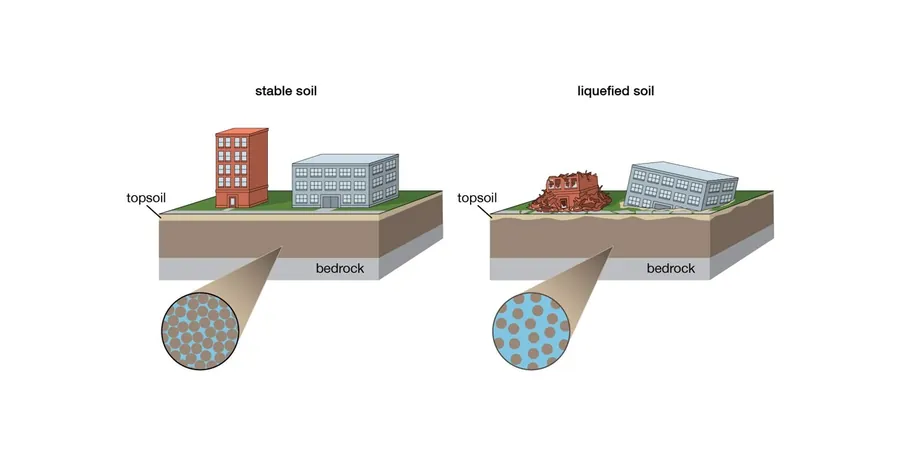
A factor of safety below 1.0 means the soil loses strength during shaking – it is not an academic exercise, it is a construction deadline and a budget line item.
Our service areas

Methodology and scope

A standard liquefaction analysis starts with a truck-mounted drill rig boring down 60 to 100 feet, collecting split-spoon samples at regular intervals. In Eugene’s saturated silts, we often pair this with a CPT test to get a continuous profile of tip resistance and sleeve friction without disturbing the sample. Back in the lab, we run grain-size distributions and Atterberg limits per ASTM D2487 to classify the fines content, because silty sands with more than 35% fines behave differently than clean sands under cyclic loading. The Seed & Idriss simplified procedure, updated in NCEER workshops, remains the backbone of our evaluation. For sites near the river or in the floodplain, we also look at the factor of safety against surface manifestation. You want a number above 1.2 for a low-risk classification, and we have seen projects where that threshold made all the difference between standard footings and a vibrocompaction treatment.
Soil Liquefaction Analysis in Eugene Oregon – Seismic Safety for Your Project
Technical reference — Eugene Oregon

Local considerations

In Eugene, we often see that the biggest surprise for developers is not the presence of liquefiable soil, but the differential settlement that comes with it. When one corner of a building settles six inches and the other stays put, you are looking at structural damage that insurance rarely covers fully. The 2011 Christchurch earthquake in New Zealand showed the world what liquefaction can do to a modern city built on river sediments, and while Eugene sits in a different tectonic setting, the soil profile along the Willamette has uncomfortable similarities. A proper analysis gives you the lateral spreading displacement and vertical settlement estimates you need to decide between deep foundations, stone columns, or a complete site rejection. Without it, you are essentially gambling with a soil deposit that turns to quicksand under cyclic loading – and in a seismic zone, that gamble has a deadline.

Need a geotechnical assessment?

Reply within 24h.

Email: contact@geotechnical-engineering.vip

Applicable standards

IBC 2021 Section 1613, ASCE 7-22 Chapter 11, ASTM D1586-18, ASTM D2487-17, NCEER 1997 Workshop Recommendations

Technical parameters

ParameterTypical value
Maximum depth of investigation30 m (100 ft) typical for mid-rise structures
SPT sampling intervalEvery 1.5 m (5 ft) per ASTM D1586-18
Groundwater measurementStabilized level in borehole after 24 hours
Peak ground acceleration (PGA)Per USGS hazard maps, site class D default
Fines content threshold35% passing No. 200 sieve per NCEER guidelines
Factor of safety target1.2 to 1.5 depending on structure importance
Post-liquefaction settlementEstimated per Tokimatsu & Seed method

Frequently asked questions

Does the City of Eugene require a liquefaction study for residential projects?

The city follows the Oregon Structural Specialty Code, which adopts IBC and ASCE 7. If your site has saturated loose sands in Seismic Design Category D or higher, a study is triggered. Single-family homes on shallow footings may not always require one, but any commercial or multi-family building over two stories almost certainly will. We can review your geotechnical report scope with city reviewers during pre-application.

How much does a typical liquefaction analysis cost in Eugene?
How long does the analysis take from start to report delivery?

Fieldwork typically takes one to two days. Lab tests on the recovered samples run three to five business days, and the engineering report with factor of safety calculations is usually completed within two weeks of the drilling. We prioritize reports when construction schedules are tight.

Location and service area

We serve projects across Eugene Oregon and its metropolitan area. More info.

View larger map