GEOTECHNICAL ENGINEERING
EUGENE OREGON
HomeFoundationsPile foundation design

Pile Foundation Design in Eugene Oregon

Geotechnical engineering with regional judgment.

LEARN MORE

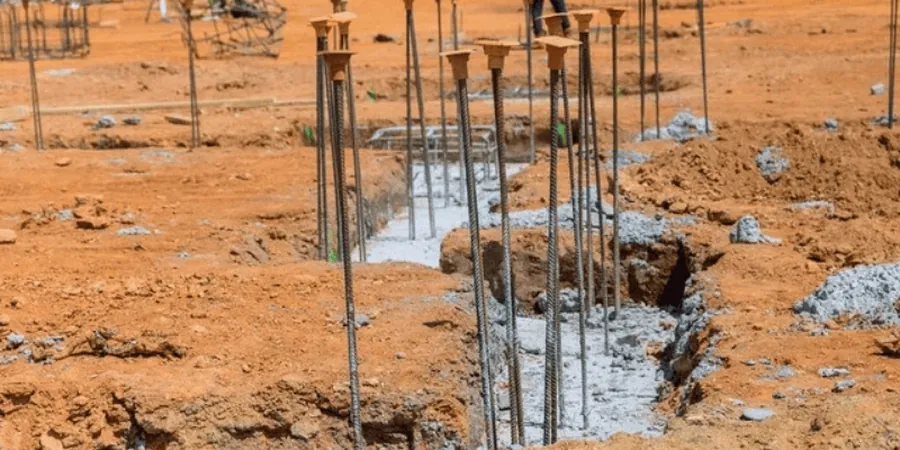
A mixed-use building near the Whitaker neighborhood hit refusal at 15 feet. Cobbles and dense gravel over soft clay. That's Eugene. The upper layer tricks you into thinking you have bearing. Then the auger drops. We've seen this pattern from the Whiteaker to the Bethel area. The Willamette River and its tributaries left a complex stratigraphy. Shallow footings work in the south hills. They don't work on the valley floor. For those sites, pile foundation design becomes the only reliable path. We combine site-specific grain-size data with SPT refusal depths to pick the right pile type. Sometimes driven H-piles. Sometimes drilled shafts. The decision depends on what's below the cobble layer. That's what we determine before a single pile goes in.

In Eugene's floodplain, pile design isn't about bearing capacity. It's about surviving what the soil does during an earthquake.
Our service areas

Methodology and scope

Eugene's wet winters change everything. The groundwater table sits high from November through May. Some sites have water at 3 feet. Designing piles in saturated silts requires careful consideration of downdrag and liquefaction potential. The Oregon Structural Specialty Code mandates seismic design category D for much of the city. That means lateral demands control many pile designs. We run LPILE analyses for every project. The alluvial deposits along the Willamette can lose strength during a Cascadia event. This is where liquefaction assessment feeds directly into the pile design. If the upper 30 feet will liquefy, the pile must carry load through skin friction in deeper, competent layers. We often specify a permanent steel casing through the liquefiable zone. No shortcuts here. The code won't allow it. The soil won't forgive it.
Pile Foundation Design in Eugene Oregon
Technical reference — Eugene Oregon

Local considerations

The Eugene Formation underlies much of the city. It's a competent, cemented silty sandstone. But it's not flat. The surface is uneven. Channels exist where old streams cut through it. A pile tip bearing on the Eugene Formation can have 50 tons of capacity. A pile tip 10 feet away, in a buried channel fill, might have 10 tons. This is the biggest risk in Eugene pile design. We see it on projects near the river. The geotechnical investigation must be dense enough to map these channels. Three borings for a building isn't enough when the target stratum has paleochannels. We push for enough exploration to see the pattern. A pile that settles differentially creates structural damage that costs far more than the extra borings.

Need a geotechnical assessment?

Reply within 24h.

Email: contact@geotechnical-engineering.vip

Applicable standards

ASCE 7-22 Minimum Design Loads, IBC 2021 Chapter 18 Soils and Foundations, ASTM D1143-20 Standard Test Methods for Deep Foundation Elements Under Static Axial Compressive Load, AASHTO LRFD Bridge Design Specifications 10th Edition, OSSC 2022 Oregon Structural Specialty Code

Technical parameters

ParameterTypical value
Design StandardIBC 2021 / ASCE 7-22
Seismic Design CategoryD (typical for Eugene basin)
Typical Pile TypesDriven H-piles, drilled shafts, micropiles
Common Bearing StratumDense gravels / weathered Eugene Formation
Lateral Analysis MethodLPILE / COM624P
Groundwater Depth1 to 5 feet (winter high)
Settlement Criteria0.5 inch total, 0.25 inch differential
Load Test MethodASTM D1143 (compression), D3966 (lateral)

Frequently asked questions

What pile types are most common in Eugene?

Driven H-piles work well where the cobble layer is thin and the Eugene Formation is reachable. Drilled shafts are better where boulders or thick gravel would deflect an H-pile. We've also used micropiles for tight access sites in downtown Eugene. The choice follows the ground conditions, not a preference.

How much does a pile foundation design cost in Eugene?
How do you account for the high groundwater table?

The groundwater in Eugene's winter months sits within 5 feet of the surface across much of the valley floor. We design for buoyant unit weights and consider downdrag if the site will see fill placement. For drilled shafts, we specify slurry or casing to maintain hole stability through the saturated zone. The design calculations use effective stress parameters below the water table.

Location and service area

We serve projects across Eugene Oregon and its metropolitan area.

View larger map