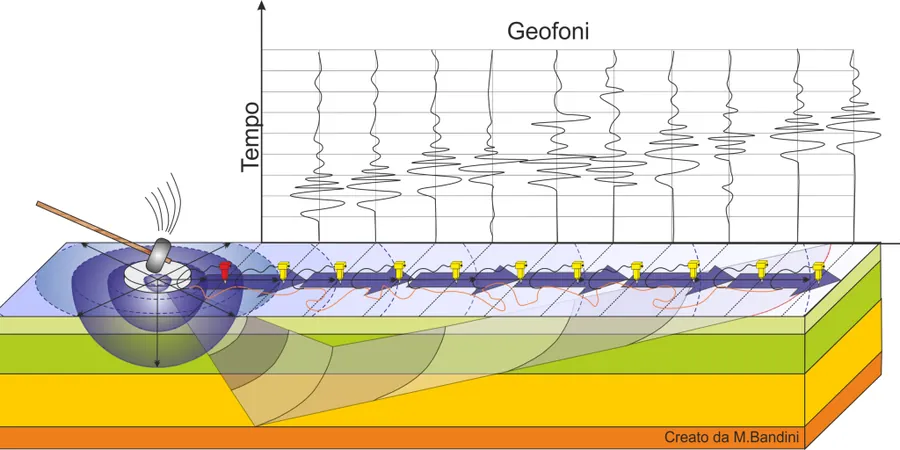
Too many Eugene projects rely on assumed Site Class D when the actual subsurface conditions could support a more favorable classification. That assumption costs money in seismic overdesign. The Willamette Valley's complex alluvial deposits—layered silts over gravels near the McKenzie River—make default assumptions risky. MASW testing removes the guesswork. We run surface-wave surveys to measure shear wave velocity (Vs30) directly. The data feeds into ASCE 7-22 site classification without the drilling downtime of downhole methods. For sites east of I-5 where shallow basalt can appear unexpectedly, the difference between a Site C and Site D drives foundation costs significantly. Our crew has run MASW lines from the Whiteaker district to the new developments off Crescent Avenue, so we understand the local velocity contrasts that make Eugene geologically unpredictable.
Direct Vs30 measurement through MASW often upgrades Eugene sites from assumed Class D to Class C, reducing seismic base shear by 20 percent or more.