GEOTECHNICAL ENGINEERING
EUGENE OREGON
HomeInvestigationCPT (Cone Penetration Test)

CPT Testing in Eugene: Accurate Cone Penetration Data for Willamette Valley Soils

Geotechnical engineering with regional judgment.

LEARN MORE

The most expensive mistake we see in Eugene? Assuming the silty clays near the Willamette River behave like the gravels up on the McKenzie fan. They don’t. A contractor pours a standard footing based on a cheap desktop study, and two winters later the floor slab cracks along a diagonal—differential settlement from a buried peat lens nobody knew was there. The Oregon Department of Geology and Mineral Industries (DOGAMI) has mapped significant portions of the valley floor as moderate-to-high liquefaction susceptibility, which makes continuous profiling essential. In Eugene, where the average annual rainfall of 46 inches keeps the water table high from November through April, a CPT test gives us the real stratigraphy—tip resistance, sleeve friction, and pore pressure—without the sample disturbance that plagues split-spoon methods in soft, saturated ground.

In Eugene’s saturated valley soils, a 15 cm² cone with pore pressure measurement catches thin sand seams that standard SPT intervals miss entirely.
Our service areas

Scope of work

ASTM D5778 governs the procedure, and we run a 15 cm² electronic cone with a U2 pore pressure filter for every sounding. Eugene sits at the southern limit of the Cascadia Subduction Zone’s strong shaking footprint. The 2022 Oregon ResSilient report updated the basin amplification factors for the Eugene-Springfield metro, meaning site class determination has become more critical for new construction under ASCE 7-22. A single CPTu log provides a near-continuous record of corrected cone resistance (qt) and friction ratio (Rf), which lets us identify thin sand layers that standard SPT intervals miss. When a project near Delta Highway encountered interbedded sands with organic silt seams, combining the CPT data with a liquefaction analysis was the only way to confirm the cyclic resistance ratio met the IBC threshold. For sites where the cone refusal depth is shallow due to dense gravel at the Pleistocene terrace edge, we often supplement with SPT drilling to extend the investigation below 30 meters.
CPT Testing in Eugene: Accurate Cone Penetration Data for Willamette Valley Soils
Technical reference — Eugene Oregon

Area-specific notes

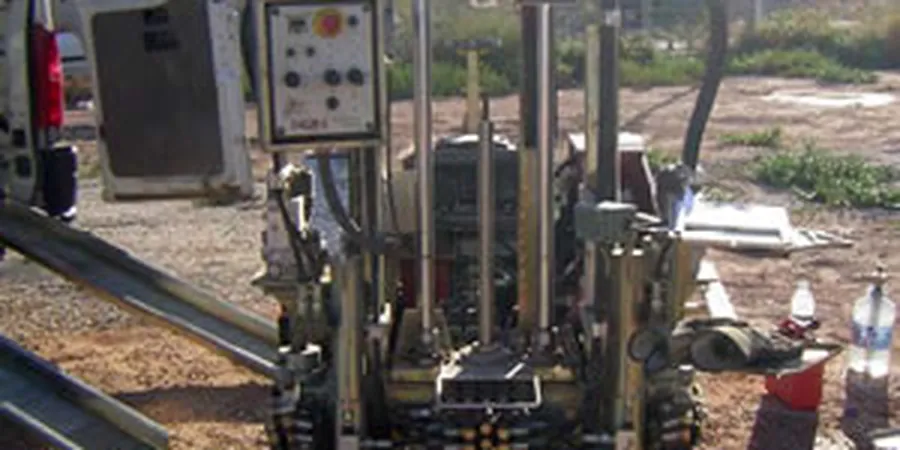
The rig itself is a tracked 20-ton CPT truck with hydraulic push cylinders capable of 200 kN downforce—enough to push through most of the valley’s alluvium but not the cobble-rich outwash near the McKenzie River’s historic channels. The main risk in Eugene is refusal on a hidden boulder at 12 meters, which leaves the lower profile unknown. When that happens, we discuss an offset boring with the engineering geologist. Another reality is traffic control: pushing soundings on West 11th or near the UO campus during term means lane closures and flaggers. Soft ground is a logistical problem too; after heavy rain, a 20-ton rig can rut a site badly. We use timber mats in wet months, but it’s something the contractor needs to plan for. Finally, interpreting CPT data in these interbedded organic silts requires experience—the friction ratio can mimic clay behavior when the soil is actually a transitional silt with very low undrained shear strength.

Need a geotechnical assessment?

Reply within 24h.

Email: contact@geotechnical-engineering.vip

Standards used

ASTM D5778-21, ASCE 7-22 (Seismic Site Class), DOGAMI Special Paper 49 (Eugene-Springfield seismic hazard), Robertson & Cabal (2015) Guide to CPT, IBC 2021 Chapter 18

Technical parameters

ParameterTypical value
Cone type15 cm² electronic, 60° apex, U2 filter
Measured parametersqc, fs, u2 (continuously at 2 cm intervals)
Derived parametersqt, Rf, Bq, normalized soil behavior type (SBTn)
Standard rate20 mm/s ± 5 mm/s (ASTM D5778)
Max depth (local)Typically 20-25 m; gravel refusal common on McKenzie fan
Pore pressure dissipation testsPerformed at target horizons; t50 reported
Data reductionRobertson (2016) SBTn charts for deltaic and alluvial soils

Common questions

How deep can a CPT rig push in Eugene’s soils?

Most Eugene sites on the Willamette Valley floor allow pushes to 20-25 meters before reaching dense Pleistocene gravels that cause refusal. Sites on the McKenzie River fan or the Coburg Hills slopes may refuse shallower due to cobbles. Our 20-ton rig applies 200 kN of push force, which handles the soft to stiff silts and clays typical of the valley without issue.

What does a CPT test cost in the Eugene area?

For a standard CPTu sounding to 20 meters with pore pressure dissipation tests at two depths, expect to budget between US$150 and US$220 per meter mobilized. The total job cost depends on the number of soundings, depth, and whether seismic (SCPTu) or dissipation testing is required. Mobilization within the Eugene-Springfield metro is typically included for projects with three or more soundings.

Can CPT replace SPT borings for liquefaction assessment in Oregon?

In many cases, yes—and it is often the preferred method. The ODOT Geotechnical Design Manual and the 2021 IBC recognize CPT as the primary tool for liquefaction triggering analysis. The continuous soil behavior type profile catches thin liquefiable layers that SPT sampling can miss. However, if gravel refusal is shallow or samples are needed for laboratory testing, we supplement with SPT borings.

How do you handle traffic control for CPT testing on Eugene streets?

We coordinate with the City of Eugene Public Works for right-of-way permits and submit a traffic control plan when the sounding location is within the traveled way. Our crew carries Oregon ATSSA flagger certification, and we provide all cones, signs, and flaggers. For work on state highways within city limits, we follow ODOT Region 2 temporary traffic control standards.

Location and service area

We serve projects across Eugene Oregon and its metropolitan area.

View larger map