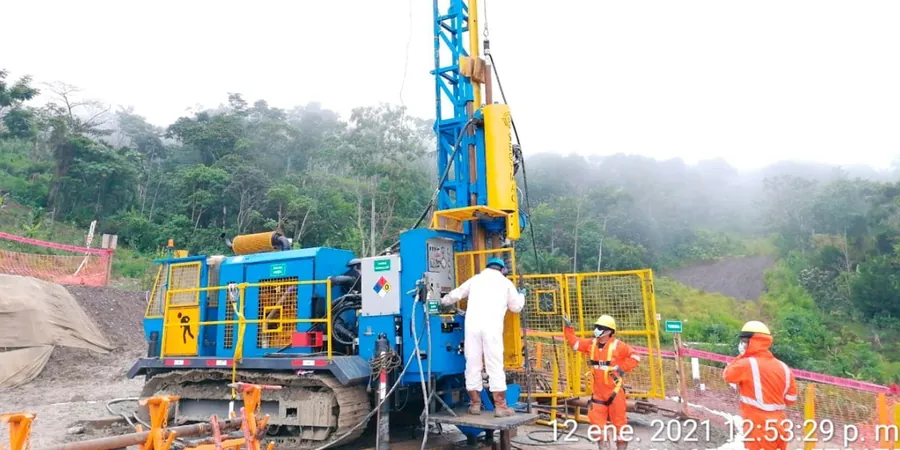
ASTM D1586 defines the procedure, but local geology gives the Standard Penetration Test its real meaning. In Eugene, where Pleistocene fluvial deposits and Holocene alluvium dominate the Willamette Valley floor, N-values shift dramatically within short vertical distances. The 1993 Scotts Mills earthquake—magnitude 5.6—and the more distant 2001 Nisqually event reminded engineers across western Oregon that deep, basin-amplified shaking is not a theoretical exercise. For projects along the Willamette River corridor or near the McKenzie confluence, SPT data anchors the geotechnical narrative: it feeds bearing capacity calculations, flags liquefiable layers, and calibrates site class per ASCE 7-22 Chapter 20. A split-spoon sampler driven 18 inches with a 140-pound hammer falling 30 inches yields more than just a number—it captures how the ground will behave when it matters most. When boring logs from Eugene’s older neighborhoods show sudden N-value drops below 10, the conversation shifts from standard footings to ground improvement strategies. Many project teams pair SPT data with CPT soundings to build continuous stratigraphic profiles, especially where interbedded silts and sands make layer boundaries ambiguous.
N60 values below 15 in saturated silty sand at depths less than 30 feet demand a liquefaction trigger analysis before foundation type is finalized.