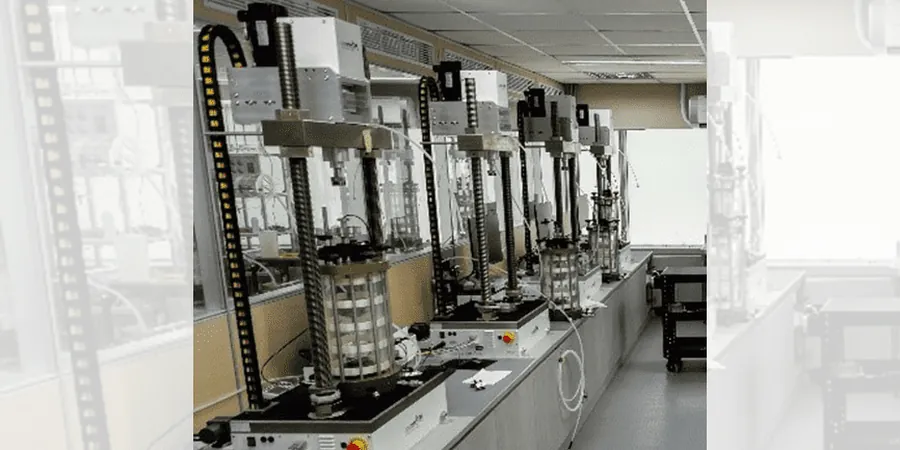
Around Eugene, the transition from Willamette Valley silts to the weathered volcanics of the Coburg Hills creates a tricky mix of cohesive and granular soils on the same lot. We see it in the lab constantly: a Shelby tube from a South Hills project arrives with stiff clay, and the next sample from the same borehole is a silty sand with just enough fines to make classification uncertain. That ambiguity feeds directly into the shear strength numbers you plug into your bearing capacity equation. A standard penetration test gives you an N-value, but it will not tell you the effective friction angle under your actual loading rate. When a project climbs above three stories or involves a cut deeper than eight feet, the city plan reviewers want to see consolidated-undrained triaxial data, not just correlations. We run the triaxial test on undisturbed specimens prepared right here in our Eugene lab, trimming the ends square to within 0.001 inches. For projects near the Willamette River where the water table sits less than six feet down, we also recommend pairing this with in-situ permeability measurements to understand how quickly pore pressures will dissipate during staged construction.
A CU triaxial test on Eugene floodplain silt often reveals an effective friction angle 4 to 6 degrees lower than SPT-based correlations predict.