GEOTECHNICAL ENGINEERING
EUGENE OREGON
HomeFoundationsRaft/mat foundation design

Raft Foundation Engineering for Willamette Valley Soils

Geotechnical engineering with regional judgment.

LEARN MORE

We set up the drill rig near the Willamette River and pull up gray, slick silt from 15 feet down. That's Eugene. The upper 30 to 50 feet here are Missoula Flood deposits, soft alluvium that consolidates unevenly under load. A raft foundation spreads the building weight across a single thick slab so differential settlement stays within a quarter-inch, not two inches. Before we pour a yard of concrete, we run CPT soundings to map the silt lenses and shear-wave velocity profiles to nail the site class for the structural engineer. You need a mat that bridges the soft spots without cracking, and that starts with knowing exactly what lies beneath the slab footprint.

A mat foundation doesn't fight the Willamette silt; it floats on it. The engineering is in controlling how much it sinks and making sure it sinks evenly.
Our service areas

Scope of work

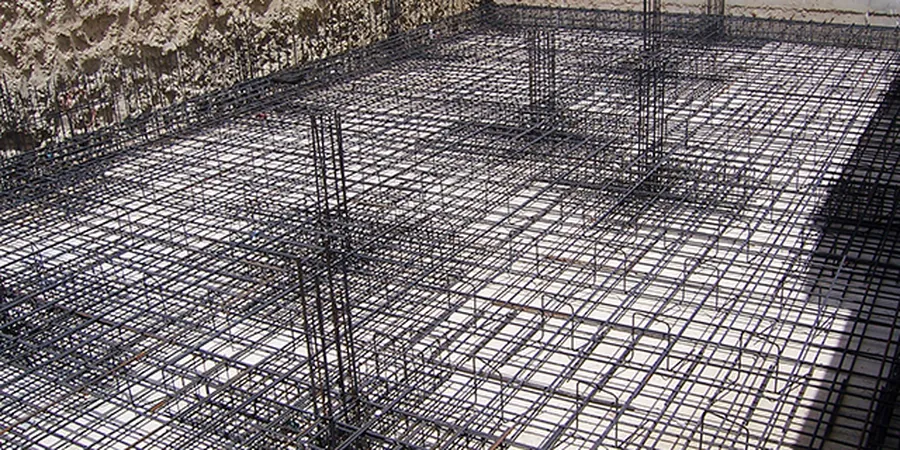
Eugene sits at 430 feet elevation in the southern Willamette Valley, where the average annual rainfall pushes 47 inches. That constant moisture keeps the fine-grained soils close to saturation year-round. For raft foundation design, we model the slab-soil interaction with modulus of subgrade reaction values derived from field plate load tests and CPT correlations, not textbook defaults. The 1993 Scotts Mills earthquake (M5.6) reminded everyone here that even moderate crustal events shake soft soils hard. Our designs lock into ASCE 7-22 Chapter 20 site coefficients. For projects on the valley floor, we often combine the mat with stone columns to stiffen the upper 20 feet and cut total settlement by half. The steel runs heavy, but the slab stays monolithic.
Raft Foundation Engineering for Willamette Valley Soils
Technical reference — Eugene Oregon

Area-specific notes

Wet winters and dry summers in Eugene create a shrink-swell cycle in the near-surface clay that tears apart conventional footings. A raft foundation resists this by acting as a stiff plate; the soil can heave two inches at the edge and the center barely moves. The bigger risk here is liquefaction. Loose alluvial sands and silts below the water table can lose all strength during a Cascadia subduction event. We run liquefaction triggering analyses using CPT data and the Idriss-Boulanger method. If the factor of safety drops below 1.2, we either deepen the mat, densify with vibrocompaction, or both. Ignoring the liquefaction potential in West Eugene is a structural gamble no engineer should take.

Need a geotechnical assessment?

Reply within 24h.

Email: contact@geotechnical-engineering.vip

Standards used

ASCE 7-22 Minimum Design Loads, IBC 2024 Chapter 18 Soils and Foundations, ASTM D5778 Standard Test Method for CPT, ACI 318-19 Building Code for Structural Concrete, AASHTO LRFD Bridge Design Specifications (where applicable)

Technical parameters

ParameterTypical value
Typical slab thickness range18 to 48 inches
Maximum allowable total settlement1 inch (IBC Table 1604.5)
Maximum differential settlement1/4 inch over 40 feet
Subgrade modulus (kv) for alluvial silt50 to 150 pci (field-corrected)
Concrete compressive strength4,000 to 5,000 psi minimum
Reinforcement yield strengthGrade 60 (ASTM A615)
Seismic site classD or E per ASCE 7-22
Groundwater depth in central EugeneTypically 5 to 15 feet below grade

Common questions

What does a raft foundation design cost in Eugene?

For a typical commercial or multifamily project in Eugene, the combined geotechnical investigation and structural design of a raft foundation runs between US$1,200 and US$4,610. The spread depends on the number of CPT soundings, lab testing scope, and whether we run full 3D finite element modeling.

When is a raft foundation better than isolated footings in the Willamette Valley?

When the soil bearing capacity drops below 1,500 psf or the predicted differential settlement between columns exceeds half an inch. In Eugene, that happens frequently on the alluvial flats where ten feet of compressible silt sits over another thirty feet of the same. A raft bridges those soft zones and eliminates the need for deep piles in many cases.

How do you account for the high groundwater in the design?

We measure the static water level in every boring and install a vibrating-wire piezometer on longer projects to track seasonal fluctuation. The buoyant unit weight of the soil enters the settlement calculation directly. For buoyancy control, we specify a drainage blanket and, where needed, a sub-slab waterproofing membrane tied into the perimeter drain.

What seismic provisions apply to a mat foundation in Oregon?

ASCE 7-22 governs the loads, and we use the Willamette Valley-specific site amplification factors from the USGS Seismic Design Maps. For site class D or E soils common in Eugene, the short-period and long-period accelerations get amplified by 30 to 90 percent over bedrock values. The mat is detailed with top and bottom mats of reinforcement to handle both gravity and overturning moments without separation.

Location and service area

We serve projects across Eugene Oregon and its metropolitan area.

View larger map