GEOTECHNICAL ENGINEERING
EUGENE OREGON
HomeLaboratoryProctor test (Standard or Modified)

Proctor Testing in Eugene Oregon: Field Compaction Verification You Can Rely On

Geotechnical engineering with regional judgment.

LEARN MORE

The most common call we get after a rainy week in Eugene isn't about foundation design — it's about fill that failed compaction. A crew runs a smooth-drum roller over silty subgrade near the Willamette River, the nuclear gauge reads 92%, and suddenly the project stalls. The problem almost always traces back to a missing or outdated Proctor reference curve. Without a site-specific Proctor test, you're guessing at maximum dry density, and in the layered alluvium that defines Eugene's flatlands, guesswork is expensive. We run both Standard (ASTM D698) and Modified (ASTM D1557) Proctor tests from our Eugene lab, often pairing them with sand cone density checks in the field to close the loop between lab optimum and real-world lift compaction. For deeper subgrade evaluation, we'll sometimes correlate results with test pits to visually confirm soil type against the lab curve before the fill operation scales up.

A Proctor curve is not a universal constant — it's a snapshot of a specific soil at a specific compactive effort, and in Eugene's heterogeneous Willamette Valley deposits, assuming otherwise is the fastest route to a failed density test.
Our service areas

Scope of work

Eugene sits on a complex stack of Pleistocene terrace gravels, Missoula Flood silts, and recent Willamette River deposits. That means the material coming out of a cut on the south side of Skinner Butte can behave nothing like the fill borrow from a Delta Highway site two miles away. A single Proctor curve won't cover both. We determine optimum moisture content and maximum dry density for each distinct soil unit, typically running Method A or C for Standard Proctor and Method C for Modified Proctor when structural fill is specified. The lab work includes moisture-density curves plotted at five compaction points, with soil classification cross-checked against grain size analysis and Atterberg limits because a borderline silt (ML) in Eugene's wet winter can turn unstable if the Proctor target is set too dry. The key output isn't just a number — it's a compaction specification that actually works for Lane County's seasonal groundwater swings, where the water table in the valley floor often sits within 3 to 6 feet of the surface from November through April.
Proctor Testing in Eugene Oregon: Field Compaction Verification You Can Rely On
Technical reference — Eugene Oregon

Area-specific notes

Eugene's population has grown past 180,000, and with it, infill development has pushed into areas where the soil profile is anything but textbook. The 1993 Scotts Mills earthquake — a magnitude 5.6 event centered near Silverton — was felt strongly here and reminded local engineers that even moderate seismic loads can trigger settlement in poorly compacted fill. If a Proctor test is run on a grab sample that doesn't represent the full particle gradation of the borrow source, the resulting density target can be off by 5 to 8 pcf. That translates to under-compacted structural fill under footings, approach slabs, or pavement subgrade. We see this most often on commercial pad sites in west Eugene, where thin layers of organic silt get mixed into fill during wet-weather grading. The fix isn't a new roller — it's a proper Proctor curve backed by material verification, and a moisture conditioning plan that accounts for Lane County's six-month rainy season.

Need a geotechnical assessment?

Reply within 24h.

Email: contact@geotechnical-engineering.vip

Watch how it works

Standards used

ASTM D698-12(2021) — Standard Proctor, ASTM D1557-12(2021) — Modified Proctor, ASTM D4718-15 — Oversize correction, ASTM D2487-17 — Soil classification (USCS), ASTM D6938 — Nuclear gauge field density (correlation reference)

Technical parameters

ParameterTypical value
Standard Proctor (ASTM D698)12,400 ft-lbf/ft³ (600 kN-m/m³) compactive effort
Modified Proctor (ASTM D1557)56,000 ft-lbf/ft³ (2,700 kN-m/m³) compactive effort
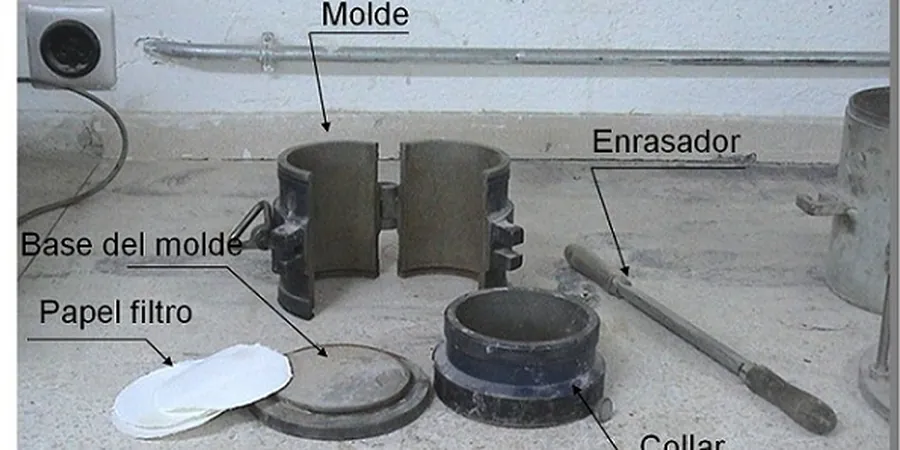
Mold sizes available4-inch (101.6 mm) and 6-inch (152.4 mm) diameter
Oversize correctionApplied per ASTM D4718 for +4 or +¾-inch fraction
Typical optimum moisture range (Eugene silts)12% to 19% for ML soils
Typical max dry density range (local)105 to 125 pcf for valley fill materials
Method selectionMethod A, B, or C based on particle size distribution
Curve pointsMinimum 5 compaction points per Proctor curve

Common questions

How much does a Proctor test cost in Eugene?

A single-point Proctor curve (Standard or Modified) typically runs between US$100 and US$200, depending on the method and whether oversize correction is needed. If you have multiple borrow sources or distinct soil layers, each one requires its own curve. We can quote a package price when the soil units are identified.

How long does it take to get Proctor results back?

Standard turnaround is 24 to 48 hours once the sample arrives at our Eugene lab. We can expedite to same-day for active grading projects if the sample is delivered by mid-morning — common during the short dry-weather construction window between June and September.

When should a Modified Proctor be specified instead of Standard?

Modified Proctor (ASTM D1557) applies when the structural engineer or geotechnical report calls for higher compactive effort — typically for building pads supporting heavy loads, retaining wall backfill, or pavement sections with design traffic. In Eugene, most commercial and multi-family projects specify Modified, while residential landscaping and utility trench backfill often use Standard.

What happens if the field density test fails against the Proctor curve?

A failed density test usually points to one of three issues: moisture content too far from optimum, inadequate compactive effort (wrong roller, too few passes), or a Proctor curve that doesn't match the material being placed. We troubleshoot by checking the soil gradation against the original Proctor sample and, if needed, rerunning the curve on a fresh representative sample.

Location and service area

We serve projects across Eugene Oregon and its metropolitan area.

View larger map